+12%
EFFICIENCY PRESERVED
$140k
SAVINGS
+48 Hours
DOWNTIME IF ASSET FAILS
In fertilizer production, mills are a central component of the process chain. Their primary function is to reduce raw materials – such as phosphate rock, urea, ammonium sulfate, or compound blends – into fine, uniform particles that meet strict chemical and physical specifications. Particle size distribution directly affects reaction efficiency, granulation quality, nutrient availability, and the homogeneity of the final fertilizer product. Whether in grinding, pulverizing, or blending operations, the mill’s performance influences product quality, energy consumption, and overall plant efficiency. Any irregularities in mill operation, such as uneven grinding or particle agglomeration, can lead to substandard product, process inefficiencies, and increased operational costs.
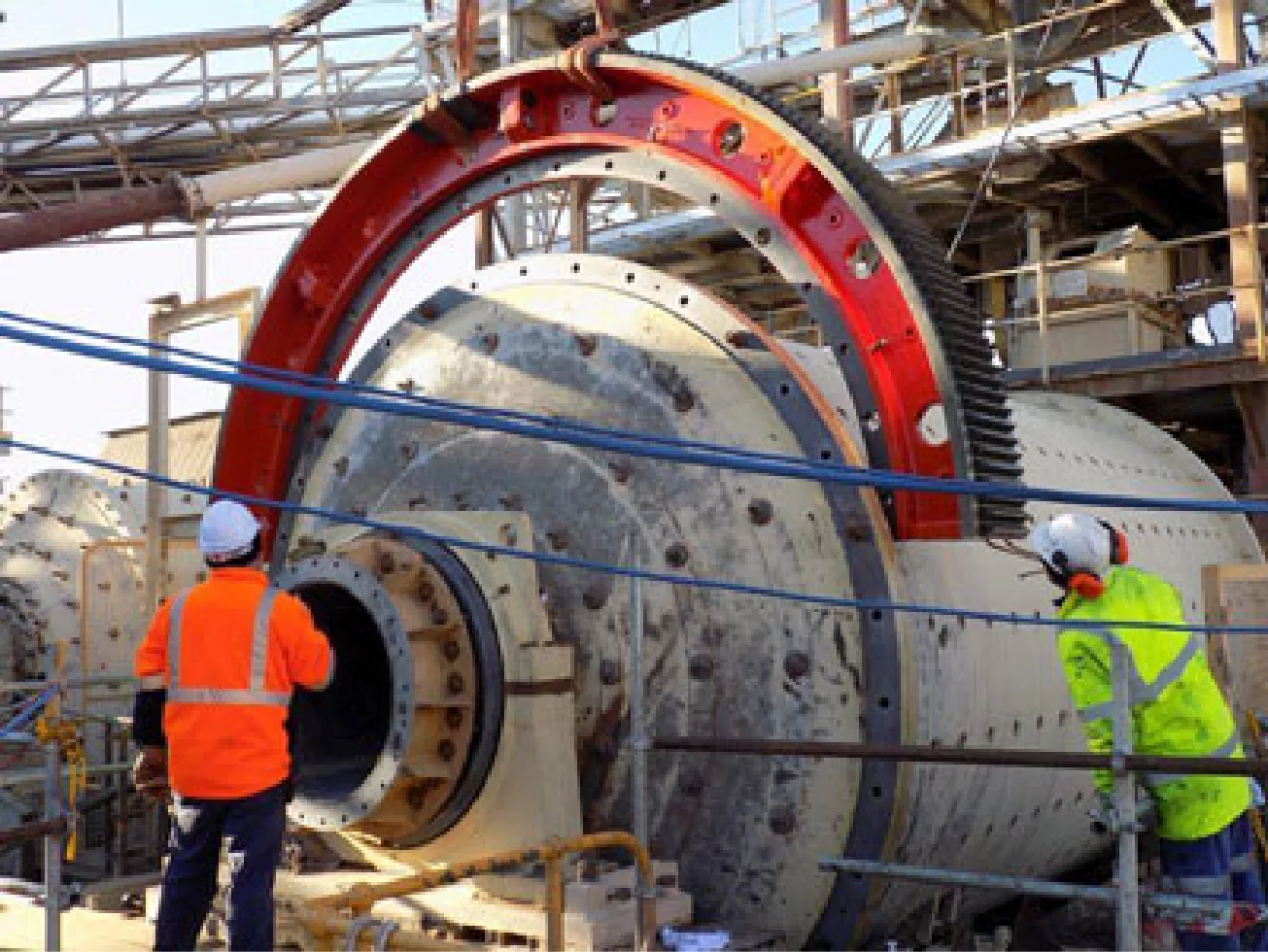
The gear system, including the girth gear, pinion, and supporting bearings, is critical for transferring motor torque to the mill shell in a controlled and precise manner. In fertilizer mills, which often operate under high torque and abrasive conditions, proper alignment, lubrication, and condition of the gear system are essential to maintain smooth rotation, reduce vibration, and prevent mechanical stress. The gear system’s integrity directly affects the mill’s operational stability, energy efficiency, and equipment lifespan. Inaccurate torque transmission or gear wear can propagate dynamic loads through the drive train, affecting bearings, couplings, and the mill foundation.
INDUSTRY
Chemical/Fertilizer
ASSET
Mill Motor Drive
PROBLEM
Gear and Pinion Degradation
AVOIDED
Unplanned Production Stoppage (48h)
Potential batch losses and quality deviations prevented